
Shut The Box
FunCraft GamesBoard
4.7194.00 Reviews
- Version
- 1.2.25982
- Installs
- 100.00K
- Age Rating
- Everyone
Screenshots



Our Review of Shut The Box
 Analysis by Appyee
I enjoy board games that are easy to explain but difficult to play well, and Shut The Box fits that description neatly. FunCraft Games presents it as a classic dice strategy game, yet the appeal is not simply rolling and hoping for the best. Each turn asks me to balance a safe move against a tempting one, and that small decision can create more tension than the uncomplicated board suggests. It is free to download, suitable for Everyone, and available for devices running Android 7.0 or later, so it is an approachable choice for a quick solo session or a casual game with someone nearby.
After spending time with Shut The Box, I see it as a compact board-game experience rather than a large, content-heavy mobile production. Its strength is the familiar dice puzzle at the center: every roll changes the options in front of me, and I have to decide how aggressively to reduce the remaining numbers. The result is a game that works well when I have only a few minutes, but still gives me something to think about when I want to chase a better result.
How the dice decisions create pressure
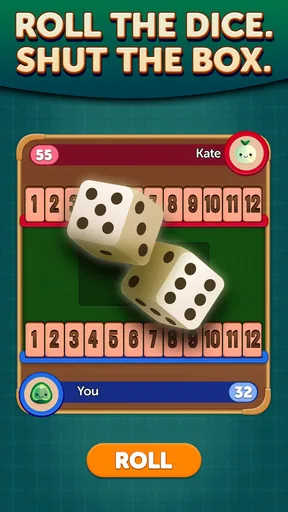
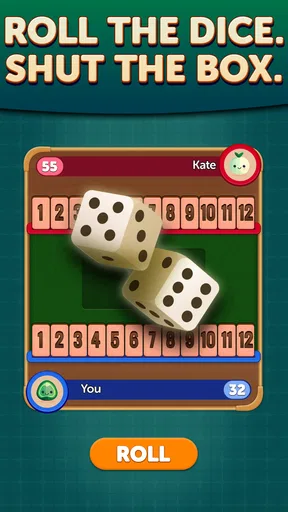
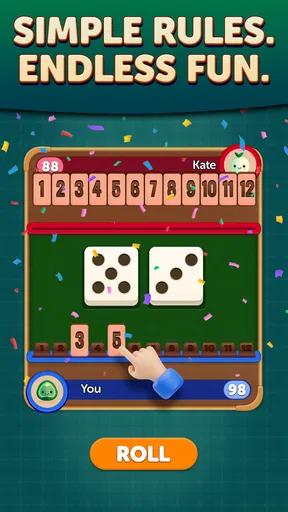
The basic rhythm is immediately understandable. I roll the dice, look at the available numbers, and choose a combination that matches the total. The aim is to close the remaining numbers before the roll becomes impossible to use. That sounds straightforward, but the interesting part is that a mathematically valid choice is not always the wisest choice.
For example, if a roll can be represented by several combinations, I have to consider what I am leaving behind. Using a high number may simplify the board now, while using smaller numbers may preserve flexibility for later. I often find myself making a choice that feels slightly worse in the moment because it gives future rolls more room to work. That is where the strategy lives: not in complicated rules, but in managing the shape of the board after every decision.
The dice introduce enough uncertainty to keep the game from becoming a pure calculation exercise. I can make a sensible move and still be punished by the next roll. That randomness is part of the traditional character of the game, although it also means a careful player cannot control every outcome. I appreciate that balance for short sessions, but anyone looking for a fully skill-based board game may find the luck factor frustrating.
A useful habit is to avoid treating every possible combination as equally good. When I have several legal moves, I first check which remaining numbers are hardest to remove with common dice totals. I then think about whether the move leaves a useful mix of low and high values. This approach does not guarantee success, but it makes each turn feel deliberate instead of automatic.
The best way to use a short session
One realistic use case is a waiting-room or commute session where I do not want to start a large game. Shut The Box is well suited to that moment because I can focus on one board and one decision at a time. It does not demand the preparation of a traditional tabletop game, and the rules are simple enough that I can return to it after a break without relearning a complicated system.
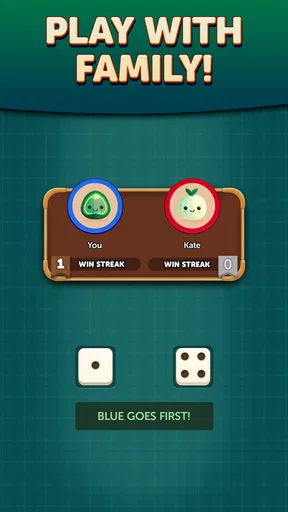
I also think it works nicely as a low-pressure family activity. A younger player can understand the matching idea quickly, while an older player can discuss why one combination is safer than another. Since the content rating is Everyone, it is an easy title to consider for a broad household audience. The strategic depth is modest, but that can be a benefit when the goal is conversation rather than a long competitive battle.
My main reservation is that the central loop can feel repetitive if I expect a large variety of boards, modes, or long-term objectives. The verified store information identifies the game as a classic dice strategy title, but it does not establish a broad collection of extra systems. I therefore approach it as a focused implementation of one traditional game, not as a substitute for a large digital board-game library.
Progress feels personal rather than expansive
The pressure in this kind of game comes from the board becoming less forgiving. Early decisions usually offer more freedom, while later decisions can leave only awkward totals. I enjoy that gradual narrowing because it makes a successful finish feel earned even when the dice are responsible for part of the outcome.
At the same time, players should set realistic expectations about progression. This is not the sort of game I would choose for character development, a story campaign, or a large unlock tree. Its progress is mainly the improvement of my own judgement: recognizing patterns, remembering which numbers remain, and resisting the urge to choose the most obvious move every time.
That makes it particularly suitable for players who like score-chasing and repeated attempts. I can play once casually, then immediately notice a decision I would change in the next run. The loop encourages experimentation without requiring a large time commitment. The trade-off is that someone who needs constant novelty may reach the limits of the format sooner than a fan of traditional tabletop puzzles.
I recommend treating each attempt as a small problem-solving exercise rather than expecting a dramatic sense of advancement. That mindset makes the game more satisfying. I also find it helpful to pause briefly before confirming a move, especially when two combinations appear equally attractive. The extra moment often reveals that one option leaves a much more manageable endgame.
Fairness, competition, and spending
The most important fairness question is how much of the result comes from decisions and how much comes from the dice. In Shut The Box, chance is clearly part of the traditional design, so I would not judge a poor run in the same way I would judge a defeat in a purely strategic abstract game. A lucky sequence can help, but good choices still matter because they determine how many useful options remain when luck turns against me.
For competitive play, that means I would use it as a light contest rather than a definitive test of ability. It is enjoyable to compare results with another person, but a single round may not tell me who is the stronger player. Several rounds would give decisions more opportunity to matter, especially because one unusually favorable or unfavorable roll can influence the entire board.
The game is free, which lowers the barrier to trying it. It also includes optional purchases priced from $0.49 to $49.99 per item. That range is worth noticing before spending, particularly if the game is being installed on a shared device or used by a younger player. I can recommend trying the free experience first and deciding whether any purchase is genuinely useful rather than assuming that spending is necessary to enjoy the core dice game.
I would not describe the purchase range alone as evidence of unfair competition. The available facts do not establish that purchases affect dice outcomes, board difficulty, or competitive results, so I would avoid making that claim. My practical advice is simpler: enjoy the basic game without spending at first, and treat every optional purchase as something to evaluate carefully. A traditional dice game should remain enjoyable because of its decisions, not because I feel pressured to buy an advantage.
This also affects who should skip it. If I strongly dislike in-app purchases in free games, I may prefer a paid board-game app with a clearly defined one-time cost. If I am comfortable ignoring optional spending and mainly want a quick dice puzzle, the free entry point is more appealing. The right choice depends less on the price of downloading it and more on how I feel about the purchase model around a simple game.
How it compares with familiar alternatives
Compared with a physical Shut the Box set, the mobile version is more convenient. I do not need to find the wooden board, dice, or a clear table, and I can start a round whenever I have a spare moment. The physical version still has an advantage for people who enjoy tactile pieces and face-to-face play. Moving tiles by hand creates a social feeling that a phone screen cannot fully reproduce.
Compared with larger digital board games, this title is easier to learn and faster to enter. I do not need to study a rulebook or manage a collection of cards, resources, characters, and menus. That simplicity is its strongest selling point for me. The cost is variety: a more ambitious board-game app may offer deeper strategy, different scenarios, online competition, or a stronger sense of long-term discovery.
It also differs from casual dice games that rely almost entirely on luck. The choices after each roll give me meaningful control over risk, so I am not merely watching numbers appear. However, it is not as strategically complete as a game where every outcome is determined by planning. Players who want a demanding competitive puzzle may be happier with a more complex abstract board game, while players who want a quick mixture of probability and judgement should find this format more comfortable.
What I would check before committing time or money
The current version is 1.2.25982, and the game has reached over one hundred thousand installs with a 4.7 average from around two thousand ratings. Those figures suggest that the concept has found an audience, but they do not tell me whether it matches my preferred play style. I would still spend a few sessions testing the repetition, the pace of the dice decisions, and my tolerance for the purchase prompts before deciding whether it deserves a permanent place on my phone.
The game was released on February 27, 2026, so I view it as a relatively recent arrival rather than a long-established mobile institution. That does not make it better or worse, but it does make my expectations more measured. I focus on what is already enjoyable instead of assuming that future additions will solve any limitation I notice.
There are also practical questions that should shape a download decision. I would want to know how comfortable the interface feels on my particular screen, whether the available play format suits solo use, and how much variety I personally need after the first few sessions. Those are not questions I can answer with a rating alone. The safest approach is to try the free version, observe how often I return voluntarily, and avoid spending until the game has proved that it belongs in my routine.
For families, I would explain the dice choices rather than present it as a purely random game. That turns each round into a small lesson in probability, risk, and planning. For adults, I would recommend setting a simple personal goal, such as improving the quality of endgame decisions rather than chasing a perfect result immediately. These approaches make the focused design feel intentional instead of limited.
My trust verdict
FunCraft Games has chosen a clear idea and kept the appeal easy to understand: roll, assess the remaining numbers, and decide how much risk to accept. I like that the game can occupy a few spare minutes without demanding a large commitment. The Everyone rating and Android 7.0 minimum also make it broadly accessible for compatible devices.
My trust in the purchase side is more cautious than my trust in the gameplay. The game is free to start, but the in-app purchase range extends from a small amount to a much larger individual item. I would keep spending optional, review each purchase deliberately, and never assume that a payment is required for fair play. Since the available product details do not establish how purchases influence competition or progression, I would judge that aspect through actual use rather than promises.
Overall, I recommend Shut The Box to someone who wants a compact board puzzle with real choices inside a simple ruleset. It is a good fit for short breaks, casual family play, and repeated attempts at making smarter decisions under dice pressure. I would skip it if I need a campaign, a wide selection of modes, or a completely purchase-free experience. For everyone else, the best reason to try it is its honest little tension: every roll gives me a chance, but never quite the chance I wanted.
Verdict
Strengths of Shut The Box
- Simple rules make it easy for new players to start quickly.
- Short rounds work well for casual play or quick breaks.
- Dice-based gameplay combines luck with basic decision-making.
- Compact design makes it suitable for playing on smaller screens.
- Can provide a relaxing, low-pressure experience for solo players.
Limitations of Shut The Box
- Luck can strongly influence results, reducing strategic control.
- Repeated rounds may feel repetitive without substantial variation.
- Limited depth may not satisfy players seeking complex strategy.
- Small interface elements could be uncomfortable on some devices.
- May have little appeal for users unfamiliar with the classic game.
Other Releases by FunCraft Games
View All


Similar Picks in This Category
View All
Ludo King®
Gametion4.1

Ludo
Yarsa Games4.6

Tile Master® - Matching Game
Higgs Studio3.6

Checkers Online
CC Games4.6

Dominoes
Loop Games4.7

Chess
Chess Prince4.6
Frequently Asked Questions
What is Shut The Box and how is it played?
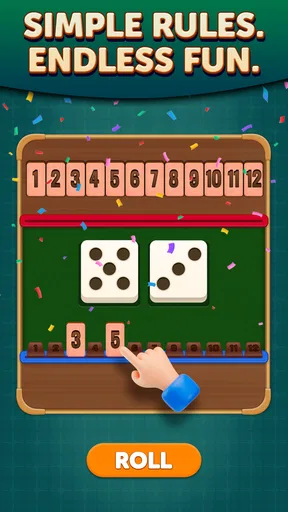
Shut The Box is a classic dice-based number game adapted for mobile devices. You roll the dice, add their values, and tap available number tiles that match the total. The objective is to close as many tiles as possible, ideally all of them, before no valid move remains. Its simple rules make it easy to learn, while the limited combinations add a surprising amount of strategy.
Is Shut The Box suitable for beginners and children?
Yes, Shut The Box is generally easy for beginners and children to understand because its main rules involve rolling dice, adding numbers, and selecting matching tiles. However, younger players may need help with basic addition at first. The game can also appeal to experienced players, since choosing between single tiles and combinations requires planning rather than relying entirely on luck.
Can I play Shut The Box offline?
Shut The Box is well suited to short offline sessions, especially when you want a casual game without an internet connection. Offline availability can depend on the specific version and device, so it is worth checking the app listing before downloading. If the game includes advertisements, online access may still be requested occasionally for loading ads or updating certain features.
Does Shut The Box include multiplayer or competitive features?
Many versions of Shut The Box focus primarily on solo play, allowing you to improve your score and attempt to close every number tile. Some editions may offer local multiplayer, turn-based matches, leaderboards, or other competitive options, but these features are not guaranteed in every app. Check the developer’s description to confirm which modes are included in the version you plan to install.
Is Shut The Box free to download, and does it contain ads or in-app purchases?
Shut The Box is commonly offered as a free download, although the exact business model varies between Android and iOS versions. A free edition may contain advertising, optional purchases, or a paid upgrade that removes ads and unlocks additional themes or modes. Before installing, review the store page for pricing, in-app purchase details, permissions, and the developer’s privacy information.
Play our best games!


